

 +1.844.3539.746
 info@flexsin.com
How AI Medical Imaging Analysis Is Saving Lives with Faster and More Accurate Diagnosis?
 Munesh Singh
Let's talk
Hospitals, diagnostic labs, and health-tech enterprises often face the same roadblocks: overwhelming data volumes, limited scalability, and the challenge of customizing AI tools to unique medical environments. Yet the stakes are too high to ignore. However, simply adopting an algorithm is not enough. What healthcare enterprises really need is customized AI medical imaging analysis consulting – expert guidance that ensures these tools are properly tailored, integrated, and scaled to deliver measurable outcomes.
A delay in diagnosis can cost lives, while a wrong diagnosis can erode patient trust and expose institutions to compliance risks. Recent studies highlight that AI in medical imaging analysis has already improved detection rates for cancers, cardiovascular conditions, and rare diseases, while reducing reporting times by up to 50% (source: JMAI).
1. Boosting Healthcare ROI Through AI Medical Imaging Analysis
For many decision-makers, terms like computer vision, AI diagnostic tools, or healthcare automation can feel overwhelming. Consulting services bridge this knowledge gap by translating technical complexity into clear, actionable strategies.
At its core, AI medical imaging analysis consulting involves:
Assessing clinical needs:Identifying which imaging modalities (X-rays, CT, MRI, pathology slides) are best suited for AI integration.
Customizing algorithms:Training AI to recognize region-specific diseases, such as tuberculosis in developing nations or melanoma in high UV-exposure regions.
Ensuring compliance:Aligning deployments with HIPAA, GDPR, and FDA regulations.
By focusing on these fundamentals, consulting makes AI adoption accessible even to non-technical healthcare leaders, ensuring buy-in from radiologists, IT departments, and executives alike.
Maximizing Profitability for Healthcare Enterprises
Healthcare enterprises face increasing cost pressures – from the expense of hiring radiologists to the inefficiencies of manual reporting. Consulting-driven AI deployment solves this by:
Reducing diagnostic turnaround times:Automated tools generate insights within minutes, freeing specialists to focus on complex cases.
Lowering operational costs:By automating repetitive workflows, hospitals can save on labor costs and resource allocation.
Driving patient conversions:Faster diagnosis enhances patient trust, encouraging them to stay with providers that leverage modern AI in healthcare solutions.
For example, Flexsin worked with a mid-sized hospital network to deploy AI medical imaging analysis on chest X-rays. The result? Reporting time was cut by 40%, and patient satisfaction scores increased by 25%.
Why Healthcare Leaders Rely on AI Medical Imaging Analysis?
Healthcare organizations that ignore next-gen medical imaging technologies risk being left behind. Here’s why consulting is a growth catalyst:
Scalability:Consultants ensure AI solutions can be deployed across multiple departments, sites, or even international branches.
Future readiness:By integrating advanced tools like AI for rare disease diagnostics, businesses position themselves as innovation leaders.
Data-driven strategy:Consulting services deliver actionable insights, not just algorithms, ensuring AI adoption aligns with long-term revenue goals. In short, AI medical imaging analysis consulting services are not just about technology -they’re about enabling healthcare businesses to grow sustainably while saving lives.
2. Strategic Benefits of AI Medical Imaging Analysis
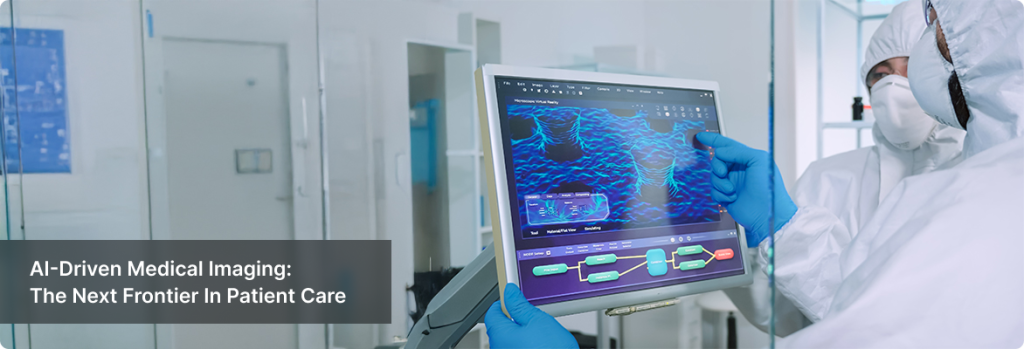
The most immediate benefit of AI in medical imaging analysis is speed and precision. Traditional diagnostic methods often require hours or even days for radiologists to process and report results. With consulting-driven deployment of Convolutional Neural Networks (CNNs) and computer vision, healthcare providers can achieve:
- Rapid interpretation of imaging scans, often within minutes.
- Enhanced diagnostic accuracy, reducing false negatives in conditions like breast cancer or brain tumors.
- Prioritization of urgent cases, ensuring patients in critical conditions are addressed first.
Consulting ensures that these systems are tailored to specific hospital workflows, enabling faster radiology reporting without disrupting existing operations.
Improving Healthcare Automation and Operational Efficiency
Beyond diagnosis, AI medical imaging analysis consulting services deliver enterprise-wide automation benefits. Hospitals are no longer just looking for diagnostic support -they want complete healthcare automation strategies. Consulting achieves this by:
- Integrating AI with hospital information systems (EHRs, PACS) to automate record-keeping.
- Streamlining administrative workflows, such as billing and insurance claims linked to diagnostic reports.
- Reducing radiologist workload, allowing specialists to focus on advanced and rare disease cases.
When properly implemented, consulting ensures that AI diagnostic tools not only enhance care but also cut down redundant processes, translating into measurable cost savings and resource optimization.
Enhancing Patient Outcomes and Building Trust
Ultimately, the success of medical image analysis depends on patient outcomes. Consulting-led solutions empower providers to deliver:
- Early disease detection, which significantly increases survival rates in cancers and cardiovascular conditions.
- Personalized care pathways, as AI identified subtle medical imaging patterns aligned with patient history.
- Higher patient trust, since modern consumers value speed, accuracy, and transparency in healthcare.
By ensuring that AI is integrated ethically and effectively, consultants help providers build long-term trust while reinforcing their brand reputation in a competitive healthcare market.
3. Overcoming Challenges with AI Medical Imaging Analysis Consulting
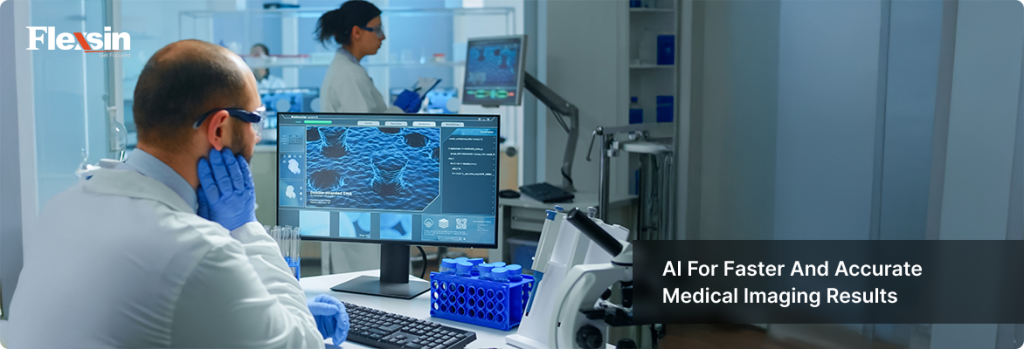
While the promise of AI medical imaging analysis is undeniable, many enterprises struggle with implementation. Without expert guidance, issues such as poor customization, weak integration, and scalability barriers can derail even the most advanced AI projects. This is where AI medical imaging analysis consulting services play a life-saving role -ensuring faster, more accurate diagnosis is not just a promise but a reality.
Customization: Tailoring AI for Faster, Context-Specific Diagnoses
No two hospitals or labs are the same. Disease prevalence, imaging equipment, and patient demographics differ widely. A one-size-fits-all AI solution often leads to errors or inefficiencies.
Consulting services address this by:
- Training algorithms on local datasets, enhancing the accuracy of detection for conditions prevalent in specific regions.
- Calibrating AI for existing imaging hardware, ensuring compatibility with CT, MRI, ultrasound, and digital pathology workflows.
- Customizing clinical priorities, such as enabling AI for rare disease diagnostics in tertiary care centers.
This customization allows healthcare providers to save lives faster, as AI becomes more responsive to the unique medical realities of each organization.
Integration: Bridging AI with Existing Healthcare Systems
Even the most advanced AI diagnostic tools fail if they can’t work seamlessly within existing hospital infrastructures. Consultants specialize in integration, making sure AI complements -not disrupts -critical workflows.
Key solutions include:
- Linking AI outputs with Electronic Health Records (EHRs), so doctors can instantly access AI-enhanced imaging reports.
- Embedding AI into PACS (Picture Archiving and Communication Systems) for smoother radiology reporting.
- Automating CAD (Computer-aided Diagnosis) alerts directly into radiologist dashboards for faster decision-making.
By ensuring AI in healthcare integrates with everyday operations, consulting helps doctors move from diagnosis to treatment in record time – a direct way AI is saving lives with faster and more accurate diagnosis.
Scalability: Expanding AI Across Hospitals and Regions
Healthcare enterprises often start with AI in a pilot project but struggle to expand. Scaling AI across departments, facilities, or geographies requires expertise that goes beyond algorithms.
Consulting-driven strategies solve this by:
- Designing modular AI frameworks that adapt to different imaging modalities (X-rays, MRIs, ultrasounds).
- Ensuring cloud-readiness, making it easier to deploy AI solutions across multiple hospital branches.
- Building compliance frameworks to meet international standards (HIPAA, GDPR, FDA) for expansion into new markets.
Scalability ensures that once AI proves its life-saving capability in one department, it can rapidly be extended to entire healthcare ecosystems -amplifying its impact on patient survival rates and healthcare efficiency.
4. Making AI Medical Imaging Analysis a Life-Saving Reality
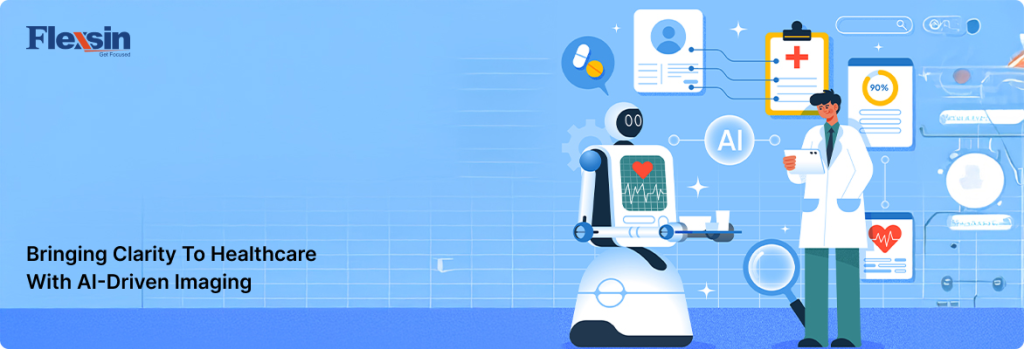
The journey to faster, more accurate diagnosis is no longer science fiction. With AI medical imaging analysis consulting services, healthcare enterprises can overcome the challenges of customization, integration, and scalability while unlocking the benefits of computer vision, CNNs, and healthcare automation. The result is not only improved diagnostic precision but also lives saved through early detection, quicker reporting, and smarter decision-making.
At Flexsin, we specialize in AI medical imaging analysis consulting, helping providers design, deploy, and scale AI diagnostic tools tailored to their unique clinical and operational needs. From enabling faster radiology reporting to deploying next-gen medical imaging technologies, our consulting services ensure that AI delivers measurable ROI while enhancing patient trust.
Healthcare is entering an era where patients expect instant, accurate results -and decision-makers cannot afford delays. Now is the time to future-proof your enterprise.
Recommendations for Adoption
Start with a pilot project:Use consulting expertise to test AI in one imaging modality (e.g., CT scans) before scaling.
Invest in integration:Ensure seamless adoption with your EHR and PACS systems to maximize impact.
Leverage customization:Train AI models on local datasets for accuracy in detecting region-specific diseases.
Plan for scalability:Design frameworks that allow AI to expand across hospitals, departments, and geographies.
Flexsin has developed bespoke medical imaging AI pipelines for clients viz. OCC Switzerland, ECG Clinical Wear, MD HealthTrak, and Sando Surgical, among others, that slashed radiology turnaround by up to 40%, resulting in higher patient outcomes and operational throughput.
Is your healthcare enterprise ready to save lives with AI medical imaging analysis consulting services? Don’t wait until competitors set the standard. Contact Flexsin Technologies to start your AI medical imaging analysis consulting services transformation. Our experts are ready to help you deploy AI that is fast, accurate, and life-saving.
Frequently Asked Questions
1. What is AI medical imaging analysis?AI medical imaging analysis uses deep learning, convolutional neural networks (CNNs), and computer vision algorithms to automatically detect, classify, and measure anomalies across imaging modalities including CT scans, MRIs, X-rays, ultrasounds, and digital pathology slides. Unlike manual radiology workflows that are constrained by radiologist availability and cognitive fatigue, AI-powered systems process images in seconds, flag urgent cases in real time, and deliver consistent diagnostic outputs around the clock.
2. What gains can hospitals expect from deploying AI imaging solutions?Enterprises deploying AI medical imaging tools in production environments are reporting some of the most significant productivity improvements in the history of clinical radiology. A large-scale clinical study found that AI-assisted radiology workflows delivered an average 15% boost in report completion efficiency, with some radiologists achieving gains as high as 40% – without any compromise in diagnostic accuracy. Separately, AI-enabled CT workflows at hospitals in India demonstrated the capacity to serve 20 to 30 more patients per day while maintaining image quality standards.
3. How does AI medical imaging analysis reduce costs?AI creates cost advantages across multiple dimensions of the imaging workflow simultaneously, which is what makes the financial case so compelling for enterprise healthcare operators. By optimizing imaging protocols in real time, AI reduces the frequency of repeat scans – one of the most significant hidden cost drivers in radiology. Teleradiology programs powered by AI have reduced wait times by up to 40% in underserved and rural settings, reducing costly transfers and emergency escalations.
4. How accurate is AI in detecting cancers and other critical condition?The diagnostic precision of AI medical imaging tools, particularly those built on deep learning architectures, has reached clinically significant benchmarks across multiple disease categories. In breast cancer screening, AI-assisted interpretation has been shown to decrease false positives by 37.3% and reduce unnecessary biopsies by 25%, while also flagging up to 45% of interval cancers that human readers. In pulmonology, deep learning models for lung nodule detection on low-dose CT scans have demonstrated sensitivity rates exceeding 90% in large-scale validation studies
5. What is the market size and growth trajectory of AI medical imaging?The global AI in medical imaging market is on one of the steepest growth trajectories in digital health, expanding from approximately $1.9 billion in 2025. The hospital segment holds 65% of end-user revenue, reflecting the concentration of high-volume imaging and the infrastructure needed for enterprise-grade AI deployment. The FDA has now cleared more than 500 AI-enabled medical devices in the United States, the majority of which are imaging-focused – a regulatory milestone that has substantially de-risked procurement decisions for enterprise health systems.
6. How does AI medical imaging integrate with existing hospital systems like PACS and EHR platforms?Integration capability is the single most critical factor separating successful AI medical imaging deployments from expensive pilots that never scale. The most commercially mature AI imaging platforms are engineered for native integration with Picture Archiving and Communication Systems (PACS) and Electronic Health Record (EHR) platforms, delivering AI-generated annotations, triage alerts, and diagnostic flags directly into the radiologist’s existing workflow without requiring a change in tools or processes.
7. How is AI medical imaging addressing the global radiologist shortage?The radiologist workforce gap is one of the most acute structural challenges facing health systems globally, with imaging volumes growing at 5% annually while radiology residency positions expand at only 4% – a mismatch that is widening every year. Research published in 2025 indicates that AI tools can reduce radiologists’ overall workloads by up to 50% by automating the pre-screening, prioritization, and preliminary reporting of routine and normal cases, freeing specialists to concentrate on complex, ambiguous, and high-acuity studies that genuinely require clinical judgment.
8. What regulatory considerations must be addressed before deploying AI medical imaging solutions?Regulatory compliance is a non-negotiable prerequisite for any enterprise-grade AI medical imaging deployment, and it must be built into the architecture from day one rather than retrofitted after clinical go-live. Deployments must align with HIPAA in the United States, GDPR in Europe, and applicable FDA clearance requirements for software as a medical device (SaMD) – all of which carry distinct requirements around data security, audit trails, model explainability, and bias documentation.
9. Which clinical specialties deliver the fastest and highest from AI Medical imaging deployments?Not all AI medical imaging use cases deliver equal returns, and B2B buyers should prioritize clinical areas where the combination of high scan volume, clear diagnostic criteria, and measurable outcome benchmarks makes ROI both rapid and defensible. Oncology is currently the largest application segment, commanding 30% of market revenue in 2025. For enterprise health systems building their AI imaging investment roadmap, oncology triage, emergency radiology prioritization, and lung disease screening represent the three areas most likely to deliver measurable, auditable clinical and financial returns within the first 12 months of deployment.
10. What should healthcare decision-makers prioritize when selecting an AI medical imaging consulting?Selecting the right implementation partner is at least as consequential as selecting the AI technology itself – because the customization depth, integration quality, and post-deployment validation strategy determine whether a solution delivers clinical value or stalls at the pilot stage. Healthcare enterprises should evaluate potential partners on five criteria: domain-specific customization capability certified PACS and EHR integration experience, a compliance-by-design methodology covering HIPAA, GDPR, and FDA requirements.
