

 +1.844.3539.746
 info@flexsin.com
What It Takes to Deliver Truly AI Frictionless Guest Experiences
 Mahendra Singh Panwar
Let's talk
Table of Contents:
- How Operational Fragmentation Disrupts Seamless Guest Experiences
- Frictionless Guest Experience Starts Before Arrival
- The Practical Applications of AI and Agentic Technology in Hotel Operations
- The CRM Architecture That Makes Frictionless Hospitality Scalable
- Creating Memorable Guest Experiences That Inspire Repeat Visits
- Building Scalable, Frictionless Guest Experiences for Modern Hospitality
- People Also Ask
The guests checking out with complaints today were not poorly served. They were poorly connected to. They encountered three different staff members who each asked for the same reservation details. Their room preference – noted at booking – was nowhere to be found at check-in. That is not a service failure. That is a data failure masquerading as a service failure, and it is costing hotels real money.
The hospitality industry has spent decades competing on room quality, amenity stacks, and location. Those still matter. But the gap that actually separates high-performing hotels from struggling ones today is frictionless guest experience – the ability to deliver a stay that feels effortless at every touchpoint, from the first search to the final checkout notification.
How Operational Fragmentation Disrupts Seamless Guest Experiences
Most hotels do not lack good intentions. They lack connected systems. Property management software sits in one corner. Loyalty data lives in another. Staff communications happen through a mix of walkie-talkies, WhatsApp threads, and paper printouts. The result is an experience that feels disjointed from the inside out.
Here is what that looks like in practice. A corporate guest who stays at a property 12 times a year still gets asked at check-in whether they want a high floor or a quiet room. The preference was captured – once, verbally, two years ago – and never made it into a system that anyone on shift today can actually see.
Hotel digital transformation, done correctly, begins with addressing this fragmentation. Not by adding more point solutions – but by connecting the ones that already exist. The Business Research Company projects the AI in hospitality and tourism market will grow from $15.69 billion in 2024 to $20.47 billion in 2025, a 30.5% CAGR (thebusinessresearchcompany.com).
Frictionless Guest Experience Starts Before Arrival
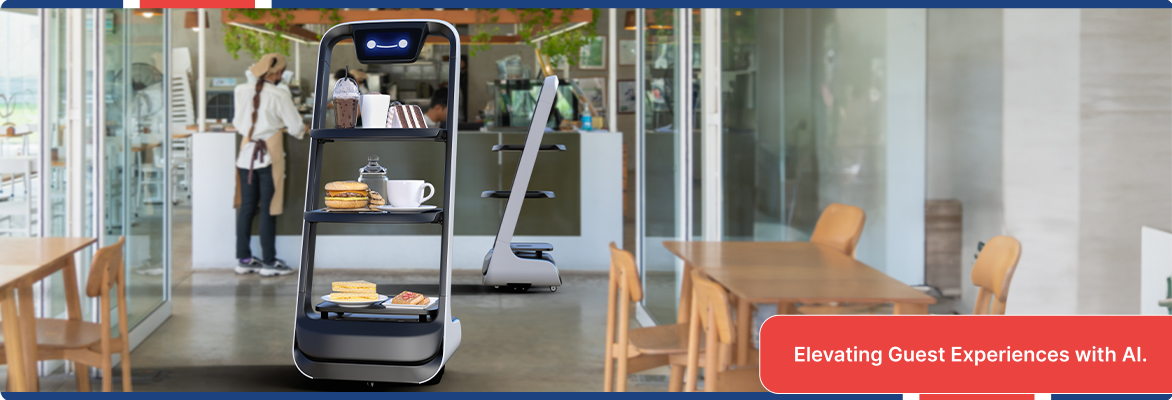
The moment a guest decides to book is when the frictionless guest experience either begins or gets permanently compromised. Pre-arrival personalization – adjusting room temperature settings, queuing preferred amenity requests, pre-loading dining preferences – is no longer the exclusive domain of luxury properties. It is an operational capability driven by how well a hotel has built its guest data platform.
This is where unified guest profiles become a competitive differentiator, not just a technical concept. When reservation data, past stay history, loyalty tier status, and expressed preferences all converge in a single actionable view, your front desk team stops guessing. They know. That knowledge changes the entire texture of the check-in interaction.
The Practical Applications of AI and Agentic Technology in Hotel Operations
The conversation about AI in hospitality too often defaults to chatbot demos and voice-activated light switches. Those are surface-level expressions of a much deeper operational shift. The real value of AI in hotel operations is in what guests never see: the automated coordination happening behind the check-in desk.
Agentic AI hotel concierge tools now handle pre-arrival taxi bookings, in-stay service escalations, and post-checkout follow-up sequences without human initiation at each step. The agent senses context, takes action, and routes exceptions to staff – which means your team’s attention stays on the interactions that genuinely require human judgment.
Hotel staff efficiency AI also addresses the labor side of the equation directly. Hospitality has one of the highest staff turnover rates of any industry. When employees spend their shifts on administrative task loops – manually updating records, manually re-entering reservation data across systems – retention suffers.
The CRM Architecture That Makes Frictionless Hospitality Scalable
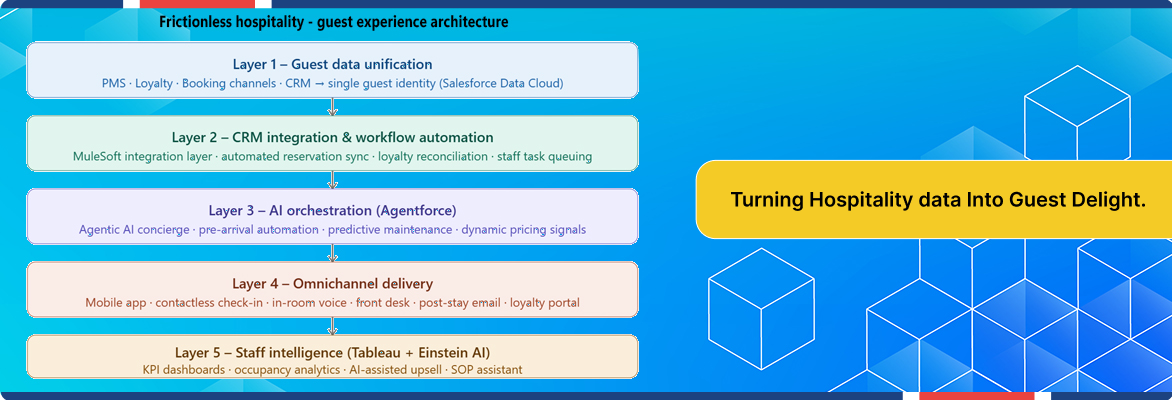
Scalable frictionless hospitality requires more than technology. It requires the right architecture to connect technology into a coherent operating layer. A hotel CRM platform that stays isolated from the property management system, the revenue management tool, and the loyalty engine is a CRM that delivers a fraction of its potential.
The integration layer is where the real leverage lives. When a guest registers for a poolside event, that action should automatically update their profile, notify housekeeping of a late return, and queue a follow-up offer based on their stated interests – all without anyone on the operations team initiating a single manual step. This is what hotel operations automation looks like when it is built to a real architectural standard, not bolted on as an afterthought.
Salesforce hospitality solutions – including Data Cloud for unified guest profiles and Agentforce for agentic AI interactions – provide the kind of integration depth that makes omnichannel guest experience management sustainable at scale.
Creating Memorable Guest Experiences That Inspire Repeat Visits
There is a metric most hotel technology conversations underweight: the advocacy conversion rate. Not how satisfied a guest was – but how likely they are to actively refer the property to a peer. That gap between satisfaction and advocacy is almost always filled by the moments guests did not expect to be great.
The birthday acknowledgment they did not have to remind anyone about. The room category upgrade triggered because the system detected a loyalty anniversary. The contactless hotel check-in that had them in the elevator with their key before the line behind them had even stepped to the desk. These are not accidental outcomes. They are designed, automated, and repeatable – which is exactly what makes them scalable.
Guest satisfaction technology, when deployed strategically, converts a good stay into a memorable one and a memorable one into a brand asset. Hospitality AI investment is not a line item to defer. It is the architecture decision that determines whether your guest experience compounds or stagnates over the next five years.
Building Scalable, Frictionless Guest Experiences for Modern Hospitality
Flexsin’s Salesforce consulting team works with hospitality operators to design, implement, and integrate the CRM and AI infrastructure that makes frictionless hospitality a repeatable operational standard – not a one-property experiment. From unified guest data platforms to agentic AI development and Salesforce hospitality cloud configuration, Flexsin brings both the technical depth and the industry context to get this right the first time.
Explore Flexsin’s Salesforce Development Services, and build the guest experience your property can be known for.
People Also Ask:
1. What does frictionless guest experience mean in hospitality?A frictionless guest experience removes every unnecessary interaction barrier – waiting, re-explaining preferences, manual check-in – between a guest and seamless service delivery.
2. How does AI in hospitality improve hotel staff efficiency?AI handles repetitive coordination tasks – reservation updates, routine inquiries, service escalations – so staff focus on high-value guest interactions. Hotel Tech Report data shows 70% of guests find AI-powered chatbots useful for standard requests.
3. What is the difference between hotel guest personalization and standard CRM usage? Standard CRM stores contact records. Hotel guest personalization uses that data to trigger automated, context-aware actions – pre-configured room settings, targeted upsell offers, proactive issue resolution – in real time across every touchpoint of the guest journey.
4. How much does hospitality AI investment typically cost versus the ROI?The AI in hospitality market grew at a 30.5% CAGR in recent years, reflecting documented operational ROI from early adopters.
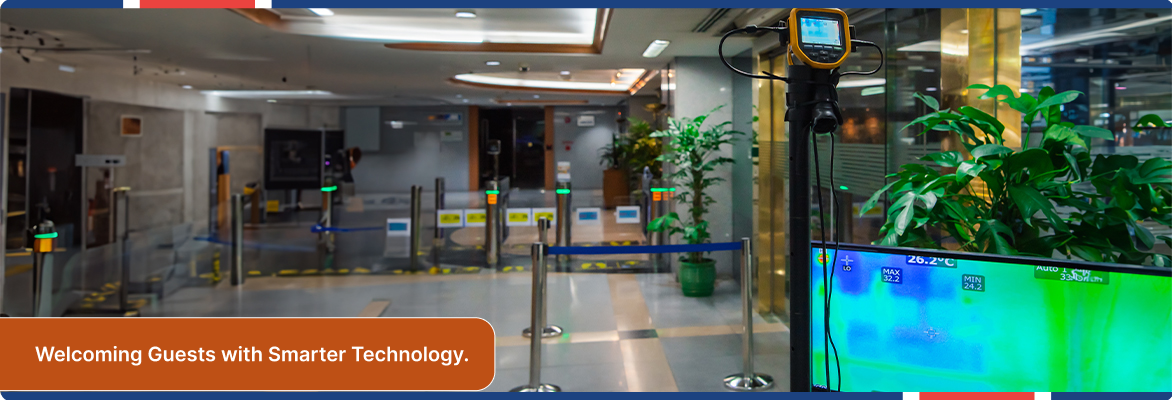
5. What technologies enable contactless hotel check-in at scale?Contactless hotel check-in relies on integrated mobile platforms, digital key provisioning, CRM-linked guest identity verification, and, increasingly, facial recognition where locally permitted.
6. How does Salesforce hospitality cloud support omnichannel guest experience delivery? Salesforce Data Cloud unifies guest records from PMS, loyalty programs, and booking channels into a single actionable profile. Agentforce then uses that profile to orchestrate personalized interactions across mobile, in-property, and post-stay channels.
7. What hotel operations automation use cases deliver the fastest ROI?Pre-arrival personalization journeys, automated housekeeping prioritization, and AI-driven service request routing consistently show the fastest ROI.
